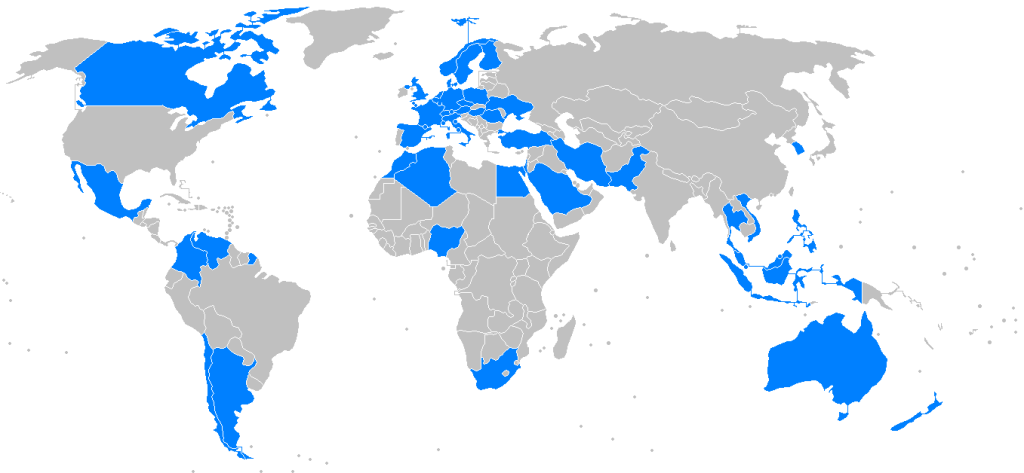
Polarization is quickly becoming the norm. This represents a growing ideological divide: Democrat vs Republican, liberal vs conservation. But, this has only made “middle powers” have become dominant forces. A middle power is a nation that wouldn’t be considered a superpower but still hold influence and power to some extent. Some examples would be Turkey, Brazil, and Canada. These nations aren’t as militarily strong as the United States but still hold significant diplomatic and even economic influence.
Middle powers tend to use a combination of nonalignment while still striving for their goals. They are often active within the United Nations or other intergovernmental organizations, coordinating and mediating conversations in regards to global conflicts, trade agreements, and beyond. The ability to collaborate and foster understanding despite differing political ideologies or stance has often been unique to middle powers. It has also made them essential to the operation of diplomacy and various organizations.
At the same time, it’s integral to note that middle powers often face restrictions in their power. For instance, they are highly vulnerable to economic or military pressures from larger powers. Their influence is also often limited to niche categories including sustainability or trade mediation.
Yet, their influence is still undeniable. Middle powers are certainly a growing force, and have only been gaining more power through projects such as the Middle Powers Initiative. When discussing diplomacy or international relations, it’s undeniable that global relations would not be what they are today without middle powers.
 Student Diplomat
Leave a comment