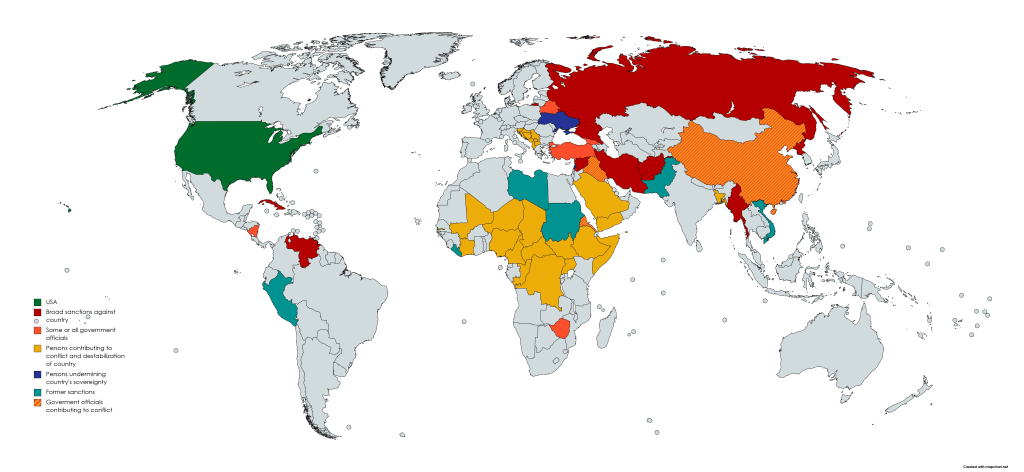
Simply put, sanctions are defined as a means of restricting the freedoms available to a particular country or state. They’re typically agreed upon as a unilateral decision between other countries. They’re also often portrayed as a non-violent alternative to active war. It’s a method of punishing a country that acts immorally or is conducting some sort of injustice. They also operate as a method of communication.
Essentially, they communicate a political message. When a powerful country like the US imposes sanctions on another, they’re saying, “stop what you’re doing”. It’s a more direct method of expressing disapproval and encouraging the opposing country to halt their activities. In fact, sanctions have the potential to prevent all-out wars, ensure humanitarian rights, and so much more.
However, the reality is that these outcomes aren’t guaranteed. While countries can stop buying a particular product from another, they can’t actually 100% stop another nation’s actions. It’s more of a not-so-subtle encouragement. If one country is adamant about invading another or starting a general war, the United States (or any other nation for that matter) can’t do anything to stop it. Rather, they can only have a reactive response in regard to the situation.
In many countries where sanctions are implemented, the leadership simply doesn’t care. They allow their citizens to struggle with finding food as their economy collapses. One of the most prominent examples of this can be seen in North Korea. Many nations have started sanctioning this country due to them harboring nuclear weapons. Citizens are suffering due to a lack of food and resources, yet North Korea continues to refuse to concede.
Clearly, in most cases, sanctions alone are enough to fully stop a nation that’s uncompromising in its position. Thus, sanctions are best suited in circumstances where a broad combination of diplomatic tools are utilized.
It’s integral to acknowledge that sanctions have world impacts on the people residing within the afflicted nation. We must aim to truly understand the limitations behind them and in what circumstances their purposes are achievable in.
 Student Diplomat
Leave a comment